
Learning Levels
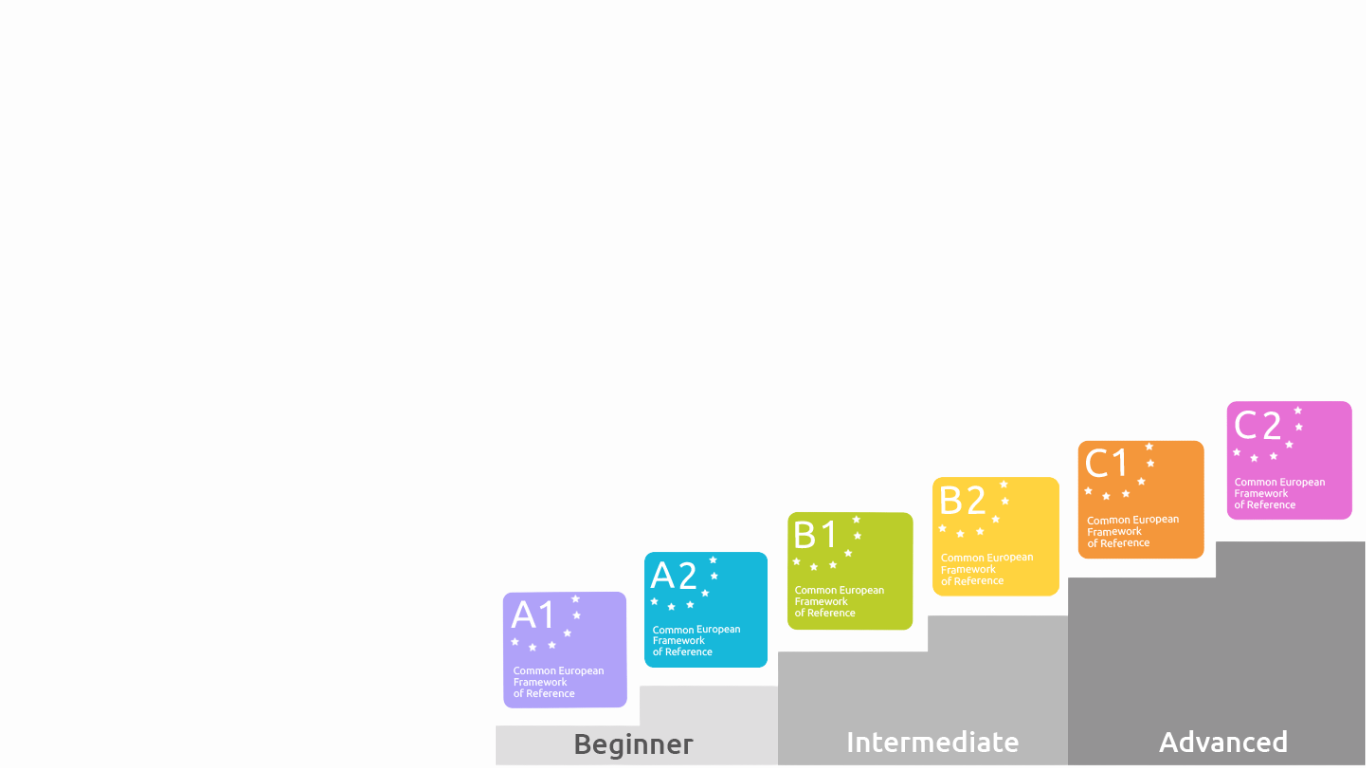
German language courses are typically divided into six levels, labeled A1 through C2, according to the Common European Framework of Reference for Languages (CEFR). These levels represent a journey from beginner to near-native fluency. Here’s a breakdown of what each level entails:
Beginner
A1
You can use basic German phrases, introduce yourself
and ask simple questions about familiar topics.For students who have had no German to
up to one year of German language instruction.
Beginner
A2
Intermediate
B1
Intermediate
B2
You can understand the main ideas
in complex texts and discussions, talk naturally with native speakers and
write detailed content on various
subjects.
Advanced
C1
You can comprehend demanding
texts and implicit meanings, speak
fluently and write detailed,
well-structured texts on complex
subjects in various contexts, drawing
information from different spoken
and written sources to reconstruct arguments and accounts coherently.
Advanced
C2
You can express yourself spontaneously, very fluently and precisley, differentiating finer shades
of meaning even in the most complex situations, with the ability to present arguments and account in a coherent
way from various sources.